
Bactobee: Science-backed live probiotics for optimal bee health
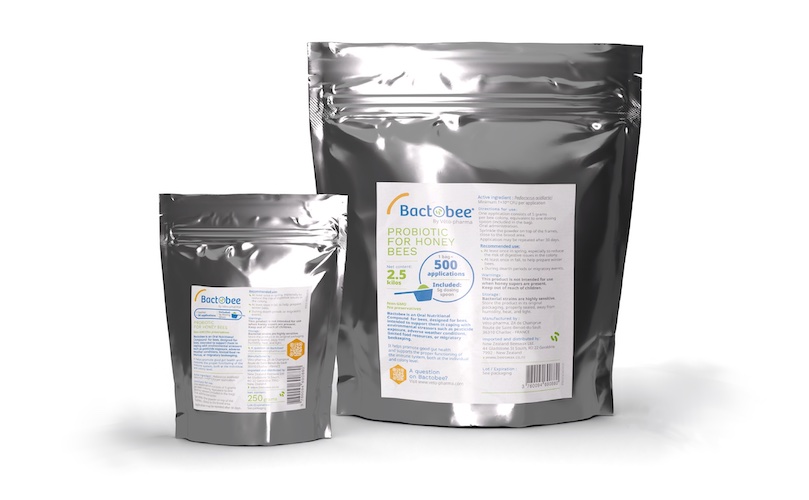
Bactobee is a powdered complementary feed containing live bacteria that helps reduce the effects of pesticide exposure and environmental stressors, while promoting gut health, overall colony resilience, and immunity.
Bactobee is available for sale in Canada and New Zealand.
Discover the benefits of probiotics for your bee colonies with Bactobee
Bactobee is a high-quality probiotic specifically designed to restore balance in the bee gut microbiota probiotic. It is made of live bacteria, unlike many other probiotics that rely on dried fermentation products, and based on a scientifically proven bacteria strain, Pediococcus acidilactici.
- Bactobee is available for sale in Canada and New Zealand.
- Available in bags of 250g (50 hives) or 2.5 kilos (500 hives)
- NON-GMO, NO preservatives, NO Animal ingredients.
- Manufactured with care in France, at our Véto-pharma facility.
Why Gut Health Matters for Honey Bees
The gut microbiota is essential for honey bee health, performing key functions such as:
- Synthesizing molecules like enzymes and vitamins.
- Can activate the immune system, protecting against diseases.
- Assimilating nutrients, providing energy for survival.
However, stressors like environmental changes, pesticides, or poor nutrition can cause dysbiosis, an imbalance where harmful bacteria out compete beneficial ones.
Effects of dysbiosis include:
- Weakened immunity, increasing vulnerability to pathogens.
- Reduced nutrient absorption, impacting energy and productivity.
- Digestive issues, lowering health and lifespan.
These factors can weaken the entire colony, particularly during stressful periods.
Science-Backed Benefits of Pediococcus acidilactici
The benefits of Pediococcus acidilactici have been extensively documented in honey bee studies.1-9 Colonies supplemented with the same carefully selected source of bacteria used in Bactobee showed significant improvements in bee health and overall colony performance:
- Can restore gut microbiota stability and support proper immune system functioning 1,2,7
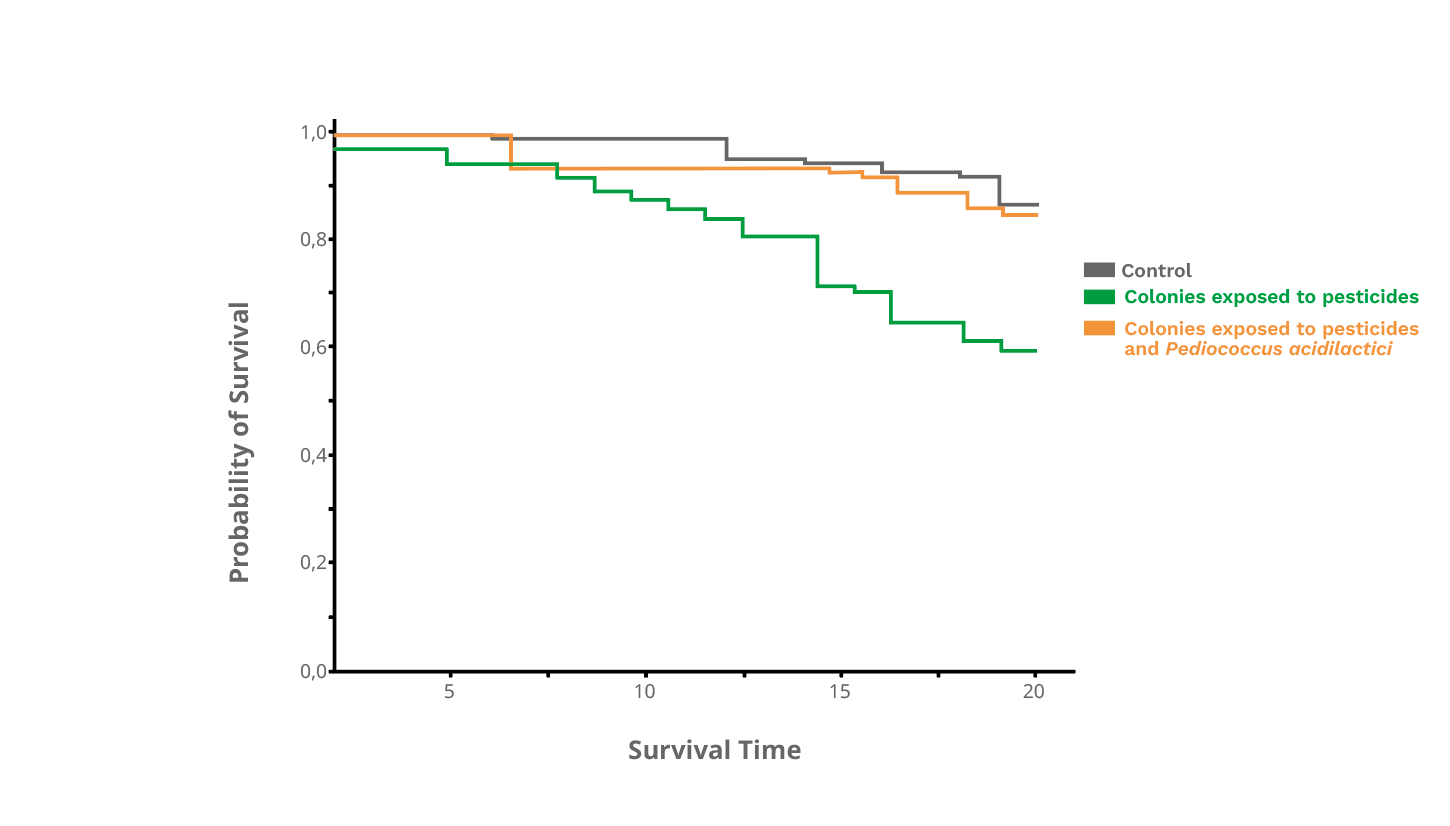
- Can contribute to greater resilience to environmental stressors, such as pesticide exposure and Nosema ceranae infection1,2,8
- Can help to improve winter survival and spring recovery3,4,5
- Can experience stronger colony growth2,7,8
- Can present optimized colony performance1,2,6,7,8
- Can enhance colony productivity4,9
How to Use Bactobee
Nurturing your bees with Bactobee is simple and effective! Follow these steps to ensure your colonies thrive:
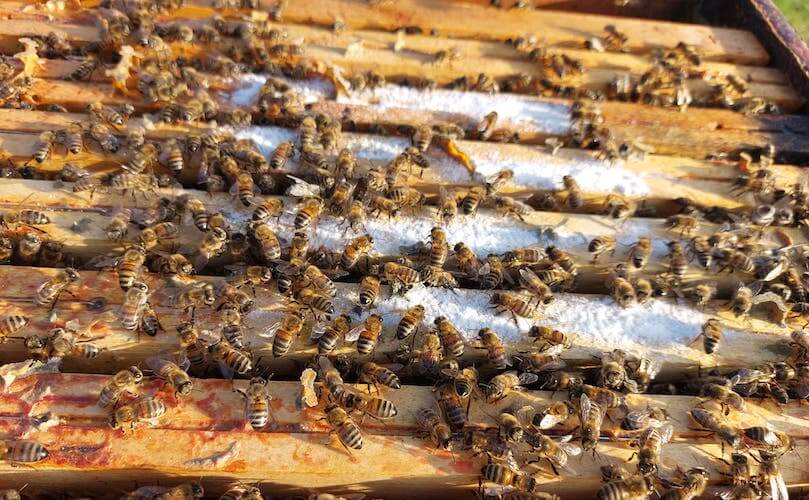
- Use 5 grams per colony per application, equivalent to one dosing spoon (included in the bag).
- Sprinkle the powder gently on top of the frames, placing it near the brood area for maximum impact.
- Applications can be repeated every 30 days if needed.
To give your bees the best support, apply Bactobee during these key times:
- Spring: At least once to help your colony prepare for the active season.
- Fall: At least once to strengthen your bees for winter.
- Stressful times: During dearth periods or migratory events when your bees need extra care.
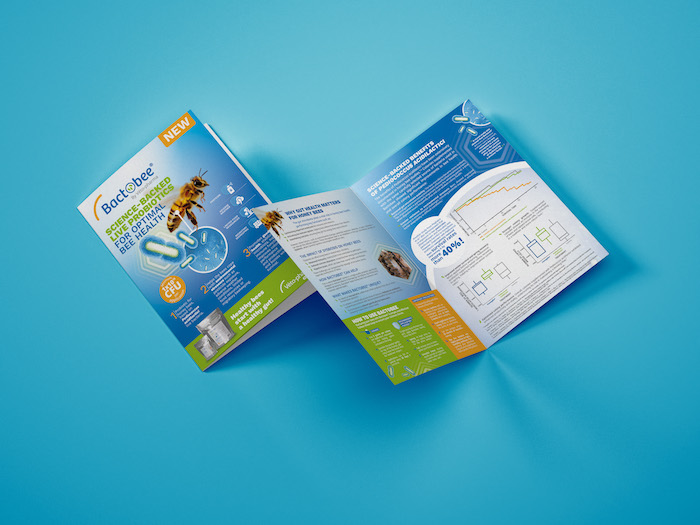
In this guide you will find key informations about Bactobee, our new product based of live bacteria Pediococcus acidilactici.
References:
1- Peghaire, E., Mone, A., Delbac, F., Debroas, D., Chaucheyras-Durand, F., & Alaoui, H. E. (2019). A Pediococcus strain to rescue honeybees by decreasing Nosema ceranae- and pesticide-induced adverse effects. Pesticide Biochemistry And Physiology, 163, 138‑146. https://doi.org/10.1016/j.pestbp.2019.11.006
2- Sbaghdi, T., Garneau, J. R., Yersin, S., Chaucheyras-Durand, F., Bocquet, M., Moné, A., Alaoui, H. E., Bulet, P., Blot, N., & Delbac, F. (2024). The Response of the Honey Bee Gut Microbiota to Nosema ceranae Is Modulated by the Probiotic Pediococcus acidilactici and the Neonicotinoid Thiamethoxam. Microorganisms, 12(1), 192. https://doi.org/10.3390/microorganisms12010192
3-Carlini, D. B., Winslow, S. K., Cloppenborg-Schmidt, K., & Baines, J. F. (2024). Quantitative microbiome profiling of honey bee (Apis mellifera) guts is predictive of winter colony loss in northern Virginia (USA). Scientific Reports, 14(1), 11021. https://doi.org/10.1038/s41598-024-61199-9
4- Bleau, N., Derome, N., & Giovenazzo, P. (2023). Commercial probiotic formulas Bactocell and Levucell promote spring brood production in Apis mellifera L. (Hymenoptera : Apidae) colonies. Journal Of Insect Science, 23(6). https://doi.org/10.1093/jisesa/iead099
5- Brar, G., Ngor, L., McFrederick, Q. S., Torson, A. S., Rajamohan, A., Rinehart, J., Singh, P., & Bowsher, J. H. (2025). High abundance of lactobacilli in the gut microbiome of honey bees during winter. Scientific Reports, 15(1), 7409. https://doi.org/10.1038/s41598-025-90763-0
6-Kaznowski, A., Szymas, B., Jazdzinska, E., Kazimierczak, M., Paetz, H., & Mokracka, J. (2005). The effects of probiotic supplementation on the content of intestinal microflora and chemical composition of worker honey bees (Apis mellifera). Journal Of Apicultural Research, 44(1), 10-14. https://doi.org/10.1080/00218839.2005.11101139
7– Gaubert, J., Mercier, P., Martin, G., Giovenazzo, P., & Derome, N. (2024). Managing Microbiota Activity of Apis mellifera with Probiotic (Bactocell®) and Antimicrobial (Fumidil B®) Treatments : Effects on Spring Colony Strength. Microorganisms, 12(6), 1154. https://doi.org/10.3390/microorganisms12061154
8- Khoury, S. E., Rousseau, A., Lecoeur, A., Cheaib, B., Bouslama, S., Mercier, P., Demey, V., Castex, M., Giovenazzo, P., & Derome, N.(2018). Deleterious Interaction Between Honeybees (Apis mellifera) and its Microsporidian Intracellular Parasite Nosema ceranae Was Mitigated by Administrating Either Endogenous or Allochthonous Gut Microbiota Strains. Frontiers In Ecology And Evolution, 6. https://doi.org/10.3389/fevo.2018.00058
9- Barakat, M et al. (2023). Examining the effect of lactic acid producing bacteria on honey quality and quantity. Jordan Journal Of Applied Science – Natural Science Series, 17(1). https://doi.org/10.35192/jjoas-n.v17i1.1504
BTB-04-IN-N01-01/26